Women search for self-defense because they want to feel safe and confident. Whether you live in Torrance, work nearby in the South Bay, or simply want to feel safer in your everyday life, this guide explains everything you need to know as a beginner. You’ll learn what women’s self-defense really means, how it works, what mistakes to avoid, and how to choose a safe, supportive place to start your journey.
What Women’s Self-Defense Actually Means
Women’s self-defense is more than a set of techniques. It’s a mindset and a skill set that helps you stay safe through awareness, prevention, and the ability to respond to real-world situations. Unlike fitness kickboxing or competitive martial arts, true self-defense focuses on:
• Practical strategies you can use immediately
• Techniques based on leverage rather than strength
• Safety-first learning environments
• Boundary-setting, awareness, and emotional readiness
The goal is not to win a fight. The goal is to stay safe, escape danger, and return home.
Why Women Consider Learning Self-Defense
Every woman begins this journey for different reasons. Some want to feel safer walking to their car after work. Others want to build confidence after a difficult life event. Many simply enjoy learning new skills and connecting with a supportive community.
Common motivations include:
• Wanting practical tools for real-life safety
• Improving confidence in everyday situations
• Navigating fear or uncertainty
• Building physical and emotional resilience
• Finding a community of women with similar goals
Here in Torrance, many women discover self-defense through friends, coworkers, or local events focused on safety and empowerment. Learn more about our Women Empowered® program here.
The Essentials Every Beginner Should Know
Before you step onto a mat or into a class, it helps to understand a few core principles that guide effective self-defense:
Awareness: Recognizing potential risks early is the first line of protection.
Boundaries: Learning how to set verbal and physical boundaries reduces escalation.
Posture and Base: Standing and moving with stability prevents you from being pushed or pulled off balance.
Leverage: Using technique instead of strength allows a smaller person to neutralize a larger one.
Calm Under Pressure: With practice, women learn to breathe, think, and act even when adrenaline is high.
These essentials form the foundation of every effective approach to women’s self-defense.
Common Mistakes Beginners Make When Learning Self-Defense
Many beginners start with understandable but unrealistic assumptions about what self-defense requires. Some believe they must hit harder, be more aggressive, or rely on speed and strength. In reality, these ideas often fall apart when facing a larger attacker or a high-stress situation.
To understand the most common pitfalls—and how to avoid them—see The Top 7 Mistakes Women Make When Trying to Defend Themselves.
This type of knowledge helps beginners stay safe while building a strong foundation.
Understanding How Leverage Works in Self-Defense
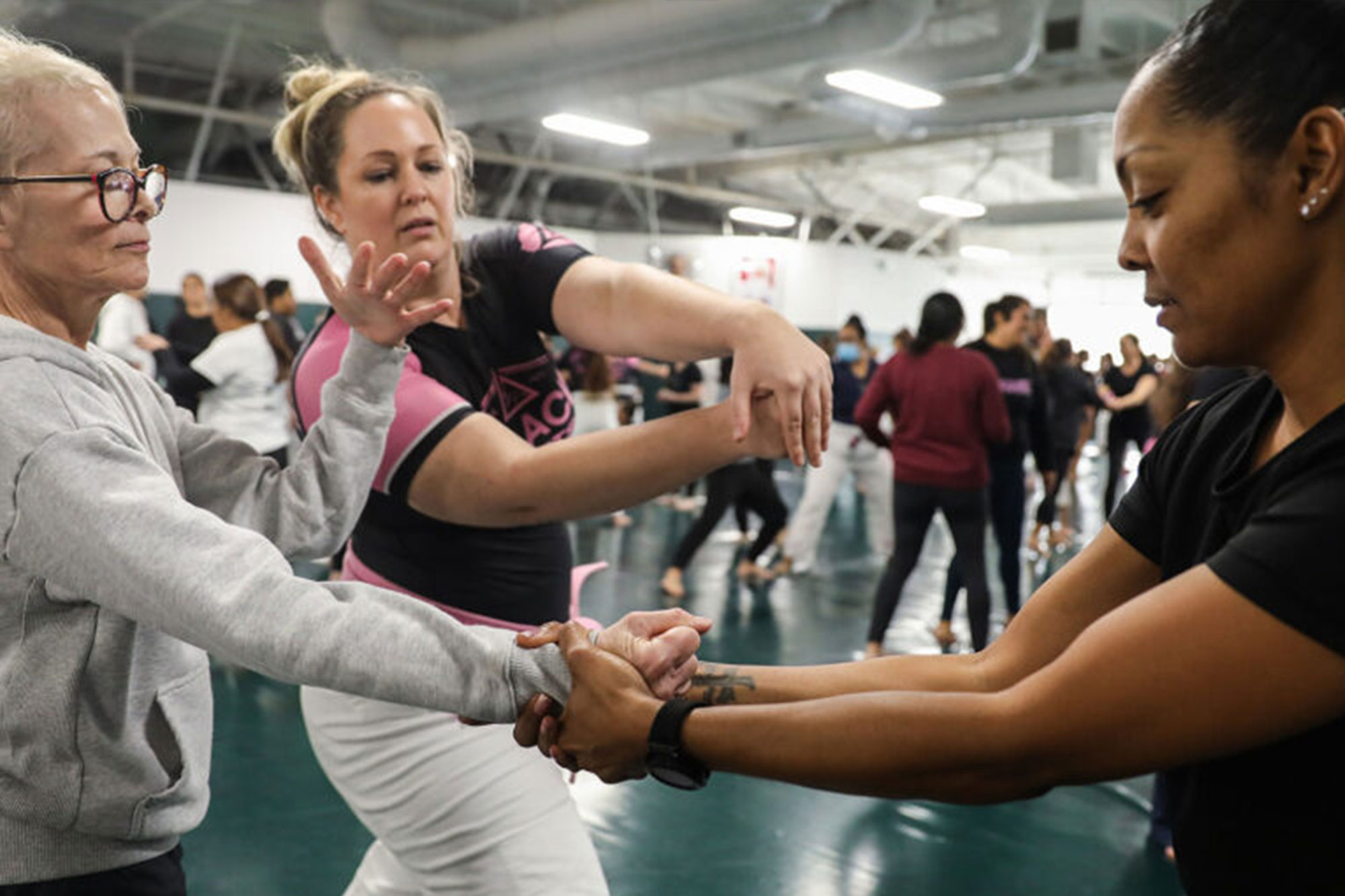
Leverage is the key to practical self-defense for women. When used correctly, leverage allows a smaller person to maintain control, create space, escape from grabs, or redirect an attacker’s weight without depending on strength.
For example:
• Proper angles can weaken an attacker’s grip
• Body positioning can prevent being pulled to the ground
• Efficient technique can help neutralize a larger opponent
• Timing and sensitivity often matter more than force
The purpose of leverage-based self-defense is not to overpower someone. It’s to create opportunities for escape and safety.
What Effective Women’s Self-Defense Training Looks Like
A strong beginner-friendly training environment should feel safe, structured, and welcoming. Women’s self-defense should always prioritize:
• Clear, step-by-step instruction
• A supportive culture that encourages questions
• Techniques that work for all ages and fitness levels
• Respectful partners who prioritize safety
• Certified instructors trained in communication and consent
• Realistic scenarios practiced at an appropriate pace
At Gracie University Headquarters in Torrance, women appreciate being part of a community where learning is collaborative rather than competitive, and where safety and respect come first.
How to Choose the Right Self-Defense Program
Not all classes are designed with women’s needs in mind. Some focus on fitness, others on striking, and others on sport-specific goals that may not translate to real-world situations.
A good women’s self-defense program should include:
• A structured curriculum
• Clear learning paths for beginners
• A focus on leverage and escape strategies
• Instructors who create a safe learning space
• Techniques that reflect realistic encounters
• Opportunities to practice verbal assertiveness
• A supportive, judgment-free atmosphere
To learn more about what matters most when comparing options, read What to Look for in a Women’s Self-Defense Program.
Want a Gentle Introduction to Real-World Self-Defense?
TRY WOMEN EMPOWERED
How Long It Takes to Learn Self-Defense
Self-defense is a skill you build over time. The goal isn’t to become an expert but to develop enough understanding and comfort that you can respond under pressure. Most women start feeling more confident within the first few weeks of consistent practice.
Progress typically includes:
• Learning basic movements and positions
• Feeling more stable and aware
• Understanding how to create or maintain distance
• Practicing escapes from common grabs or holds
• Developing calmness through repetition
Everyone learns at a different pace, and that’s completely normal.
What to Expect in Your First Self-Defense Class
A beginner class should feel welcoming and unintimidating. Many women worry about being inexperienced, not athletic enough, or unsure of what to do. The truth is, most students start with zero background.
Your first class may include:
• A warm introduction and orientation
• Learning simple movements and drills
• Partner practice in a safe, controlled manner
• Clear communication guidelines
• Encouragement from instructors and classmates
• A focus on technique, not strength
Women often leave their first class feeling relieved, supported, and empowered—especially when surrounded by an encouraging community like the one here in Torrance.
How Women Build Confidence Through Training
Confidence grows naturally as skills become more familiar. Over time, women learn to trust their instincts, stay calm in stressful moments, and set boundaries more effectively in daily life. Self-defense training often leads to:
• Increased self-awareness
• Stronger communication skills
• Reduced fear
• A sense of belonging
• Improved emotional resilience
• Empowerment beyond physical techniques
Confidence isn’t just a result of training. It’s part of the journey itself.
Final Thoughts for Beginners
Self-defense is for every woman, no matter your age, size, strength, or fitness level. The most important step is simply starting your journey in a place where you feel safe, supported, and encouraged.
Whether you live in Torrance or anywhere in the South Bay, you deserve to feel confident and prepared in your everyday life. With the right guidance and community, self-defense can be one of the most empowering decisions you ever make.
If you ever want to try a class for yourself, the team at Gracie University Headquarters in Torrance is always happy to welcome you. We offer a 10-Day Risk-Free Unlimited Class Pass!
👉 Click here to get started today! There is never a better time than now to empower yourself and your safety 😊
Frequently Asked Questions
You do not need to be in shape to begin learning self-defense. The techniques are based on leverage, timing, and body positioning rather than strength or athleticism. Most women start with little or no fitness background. With consistent practice, your comfort, confidence, and mobility will grow naturally.
Many women train once or twice per week and still make steady progress. Self-defense is about building essential skills, not memorizing dozens of techniques. Attending even once per week can help you develop awareness, boundaries, and fundamental movements that improve your overall safety.
Yes. Girls ages 12 to 17 may train alongside a female parent or guardian. Many families enjoy sharing the learning experience together, and younger students often feel more confident practicing with a trusted adult.
The training environment is women only for students. This creates a safe, supportive atmosphere where women feel comfortable learning at their own pace. Classes often include both female and male Certified Instructors to help simulate realistic size and strength differences that women may encounter in a real-life situation. The curriculum itself was developed by women, for women.
Self-defense training should always prioritize safety. Beginners learn in a controlled, cooperative environment with clear communication, slow practice, and respectful partners. Techniques are introduced gradually, and the goal is always to help you feel confident—not overwhelmed. Most women find the training to be safe, empowering, and far less intimidating than they expected.